
The post Where Do Ladybugs Go in the Winter? appeared first on A-Z Animals.
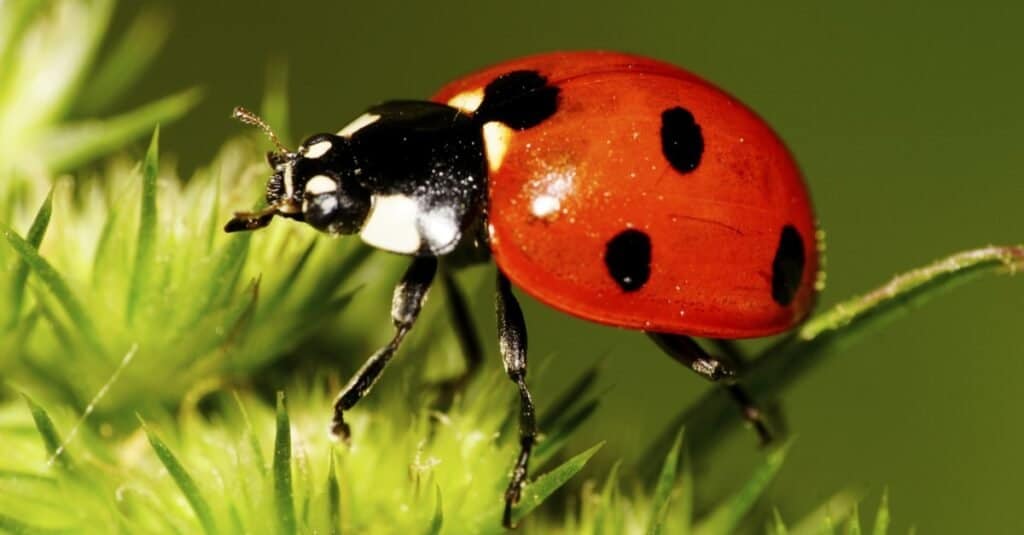
Ladybugs are tiny little bugs that represent good luck. They typically live between several months up to about a year (depending on species and conditions). Also known as ladybeetles and ladybird beetles, these insects are bright red, with black spots. Worldwide, there are over 5,000 species of ladybugs.
Since North American ladybugs live in a diverse range of places, they experience cold winters just like the majority us U.S. residents. So, where do ladybugs go in the winter? How do they survive? Keep reading to learn more about the unique winter life of this lucky insect.
This post was updated on October 12, 2025 to clarify seven spot ladybug range, ladybug lifespan, pink ladybug diet, details of diapause, and that relocating ladybugs can cause unnecessary harm.
Where Do Ladybugs Live?
Ladybugs live just about anywhere, but the exact location depends on their activity and species.
© Sergey/Shutterstock.com
Before we dive into how ladybugs survive winter, it’s a good idea to learn more about these interesting insects. Ladybugs live just about anywhere, but the exact location depends on their activity and species. For example, some ladybugs live in shelters, hidden from the outside, during winter. However, winter doesn’t look the same everywhere. Follow along down below to discover where common species of ladybugs live and more fun facts about them.
Seven-Spot Ladybug
The seven-spot ladybird (C. septempunctata) is native to Europe and Asia; it was introduced to North America, where it now is established in some regions. These bugs live in many different environments as long as a healthy population of aphids is nearby. This is why you might see more ladybugs in your garden. They are beneficial and eat the aphids that ruin common plants. Apart from insects, seven-spot ladybugs also consume nectar and pollen. Although not native to the United States, there are many residing in the country. You can also find seven-spot ladybugs in Russia, Siberia, Ukraine, Moldova, and North Africa.
Asian Ladybug
Asian ladybugs are also known as Asian ladybeetles or multicolored Asian beetles. They are native to eastern Asia but have been introduced to North America and Europe. They control aphids and eat other insects but pose threats to native ladybug species. The first time people introduced this beetle in the U.S. was in 1916, but the population didn’t thrive. Asian ladybugs are easily confused with other ladybugs since they have a red or orange coloring. They also have black marks resembling spots or the letter ‘M.’
Pink-Spotted Ladybug
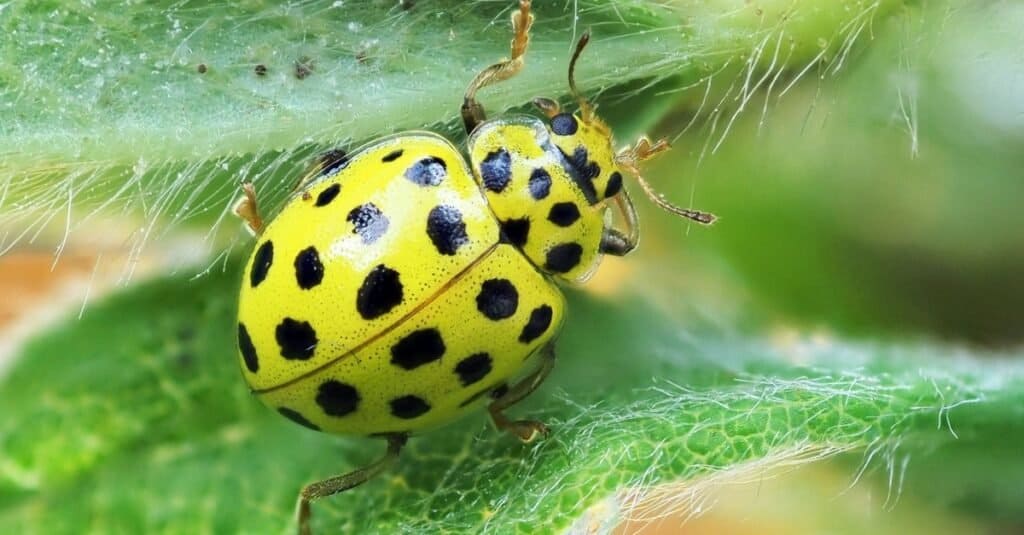
The pink-spotted ladybug is also known as the twelve-spotted ladybeetle. It is an oblong, flattened lady beetle species. You can easily identify this ladybug because of its pink color and uneven black spots. Pink-spotted ladybugs are native to North America and are used on farms and greenhouses as a biological control agent. Their diet mostly consists of aphids. In some cases, when prey is scarce, they may consume pollen, nectar, or even conspecific eggs/larvae; diet proportions depend heavily on species and environment.
Mexican Bean Beetle
Mexican bean beetles are considered a nuisance. They are oval-shaped, with eight black spots of varying sizes on each elytron. Every Mexican bean beetle has a different coloration, including orange, brown, red, and yellow. They lay eggs in clusters underneath large leaves.
As the name suggests, you can find this lady beetle in Mexico. However, it also thrives in eastern parts of the U.S. and countries as far south as Guatemala. Mexican bean beetles have also been spotted in Canada. They can be a pest, destroying large bean crops.
Can Ladybugs Survive in Winter?
Ladybugs cannot survive cold winters without protection.
©L-N/Shutterstock.com
Ladybugs cannot survive cold winters, not without protection. As temperatures drop below freezing, ladybugs escape inside homes and crevices to keep warm. Most insects escape the cold by hiding, except for a few types, like monarch butterflies that travel to warmer climates. Ladybugs undergo a method of hibernation (diapause) in protected sites, often living off stored fat reserves; in some species, this state can last many months, up to 9 months in favorable cases.
Ladybugs hide in dark, cool, and moist areas, sometimes huddled together in large groups. They prefer moist areas so they can stay hydrated while in a state of deep sleep. They look dead, but this isn’t always true. Not all ladybugs survive hibernation. Sometimes, they awaken too early when their energy reserve is empty, or winter weather lasts longer than usual. Although some ladybugs flock inside homes and cars, others stay outdoors but hide under tree bark and dark crevices.
What To Do if You Find a Ladybug in the Winter?
It can be alarming to enter your home and find a large group of ladybugs taking shelter. Usually, they choose places away from humans, so they won’t be a bother. While taking them outside immediately is tempting, this can kill them! Ladybugs can’t survive freezing temperatures directly, which is why they flee inside. Leave them alone if possible. Relocating overwintering ladybugs too early or into unsuitable conditions may harm them, so avoid moving them unless you can ensure stable, temperate conditions. When they wake up in time for spring, they will gladly feast on aphids ruining your garden.
The post Where Do Ladybugs Go in the Winter? appeared first on A-Z Animals.
October 12, 2025 at 06:12PMNixza Gonzalez.jpeg)


.jpeg)

0 Comments