

The post The Surprising Reason You Should Leave Fallen Leaves Alone appeared first on A-Z Animals.
That unsightly leaf pile that you’ve been meaning to sweep up for ages is a lot more important than you realize. It is actually creating a habitat that’s crucial for local ecology, and there are plenty of good reasons for leaving it where it is. Once you have read all about insect winter dormancy and the importance of preserving their resting places, we are sure you will put that rake away for good!
Where Do Insects Go In the Winter?
Insects are ectothermic, which means that they cannot generate their own heat. So, as temperatures drop possibly to below freezing, they are in trouble! The enzymes and chemical processes that keep their bodies functioning cannot take place. Therefore, they have evolved several different strategies to help them survive.
Migration
Monarch butterflies migrate.
©iStock.com/Ronda Brady
Many US insect species head south as temperatures drop and travel hundreds, if not thousands, of miles. Butterfly species that do this include the monarch butterfly and the painted lady. The common green darner, one of North America’s most common dragonflies, spends winter in southern US states and in Central America. The new generation flies north in the spring.
Overwintering at Different Life Stages
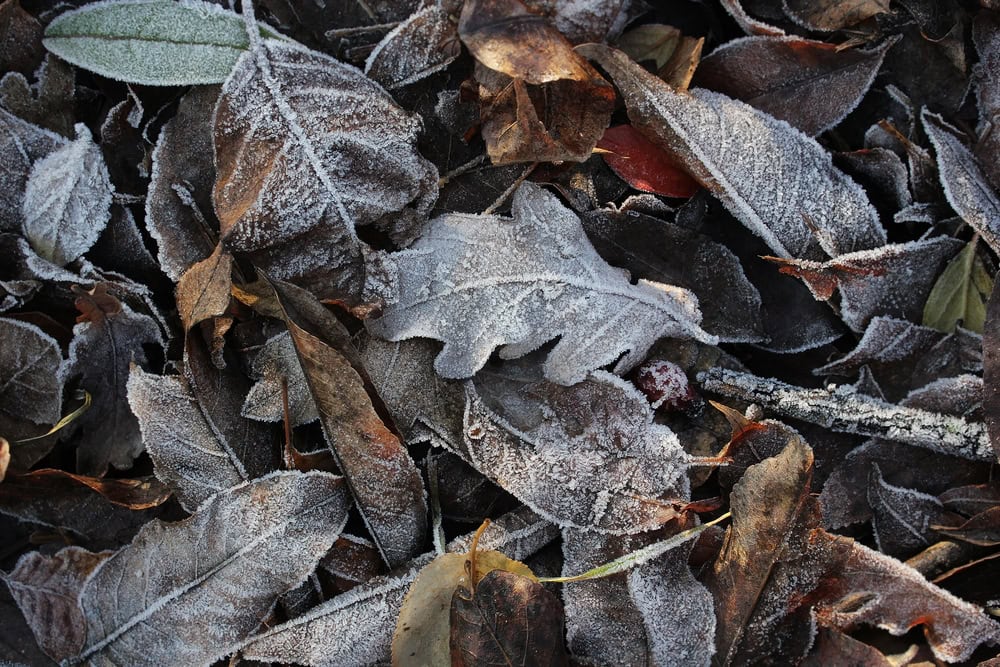
Some insects produce antifreeze.
©OlgaLo/Shutterstock.com
Insects that do not migrate have to overwinter where they are, and this is where your leaf pile is so important. Insects follow one of two life cycles. Some have a complete metamorphosis with four life stages: egg, larva, pupa, and adult. Less highly developed insects have an incomplete metamorphosis consisting of just eggs, nymphs, and adults. Nymphs look like miniature adults, but they are not able to reproduce.
Insects can enter a state that is comparable to hibernation in mammals. It is called diapause, and it is a state of suspended development marked by a reduction of metabolic activity. Different species of insects have evolved to overwinter at different life stages.
Overwintering as Larvae
Leaf litter is very useful for those insects that overwinter as larvae, as it provides protection. The heavier the cover of leaf litter, the better. The woolly bear caterpillar is a typical example. This caterpillar also produces glycerol, which is a type of antifreeze. It allows their bodies to freeze and then thaw again without their vital organs being damaged. Some can withstand temperatures as low as -90 degrees Fahrenheit.
Overwintering as Nymphs
Dragonfly, mayfly, and stonefly nymphs spend the winter in ponds and streams. They can survive even if the water freezes over, and they spend the winter feeding. In the early spring, they emerge as adults.
Overwintering as Eggs
Praying mantises overwinter as eggs. The adults lay the eggs in the fall and then die, but the eggs survive the winter. The corn rootworm does the same.
Overwintering as Pupae
The silkworm family of moths overwinters as pupae and emerges as adults in the spring. They are often attached to food plant branches. The caterpillars create an intricate cocoon for themselves, with outer and inner envelopes and waterproof layers separated by a space filled with silk.
Overwintering as Adults
The mourning cloak butterfly is an example of an insect that enters diapause as an adult. They shelter in cavities, beneath tree bark, or anywhere they can fit, to protect themselves from winter winds and predators.
Creatures Overwintering in Your Leaf Pile
Many creatures may be spending the winter in your leaf pile. Lady beetles (family Coccinellidae), soldier beetles (family Cantharidae), and fireflies (family Lampyridae) are all beetles that overwinter in leaf litter for protection. Predatory mites in the family Phytoseiidae are also common in leaf litter. Overwintering bumblebee queens seek out leaf litter or soft soil to burrow into.
Minute pirate bugs, assassin bugs, and damsel bugs use leaf litter to overwinter. All of these consume aphids and are beneficial for your plants. Spiders are not insects, but some species deposit egg sacs in leaf litter as an overwintering strategy.
Benefits for the Wider Ecology of Your Yard
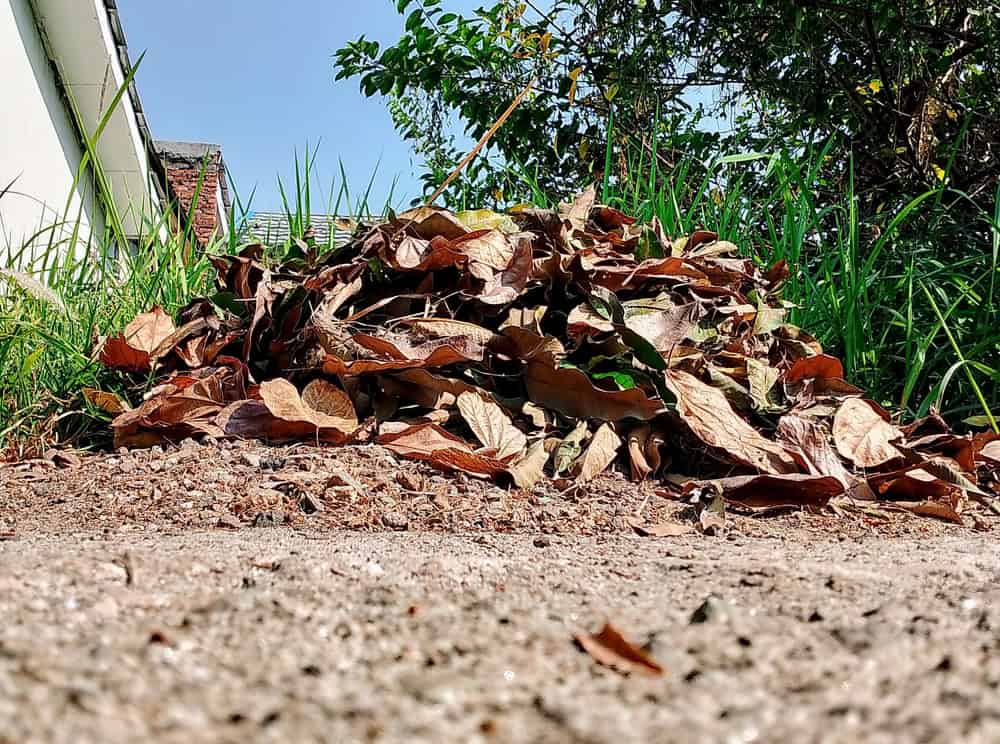
Many insects overwinter in piles of leaves.
©GWStudio/Shutterstock.com
Many animals rely on overwintering creatures in leaf litter as a food source. For example, predatory Carabidae ground beetles eat a range of animals in leaf litter, including crane fly larvae, slugs, and caterpillars. Rove beetles eat small flies, gnats, and other small arthropods. Firefly larvae are voracious predators of slugs, snails, worms, and caterpillars in leaf litter. Centipedes lay eggs in leaf litter, and in some species, the female wraps herself around the eggs to protect them.
Leaf litter provides a rich hunting ground for many spiders, and in some areas, deep leaf litter is a habitat for scorpions. Even toads can spend a lot of their time in leaf litter! Finally, many species of birds forage through leaf litter and depend on the insects that they find there.
How Removing Leaf Litter Damages Habitats
The annual leaf removal task in your yard disturbs overwintering insect communities and, in turn, reduces insect abundance and diversity in your yard and surrounding areas. If you remove the leaves before the insects have selected a location in which to shelter, this will discourage them from overwintering in your yard. If you do it after they have entered diapause, you may directly kill them by transferring them to a compost heap or landfill. You also alter the local microclimate by exposing the soil to the air, which leads to freezing or desiccation of insects sheltering in it.
Studies have shown that raking fall leaves reduced the spring emerging arthropods by 17 percent. Lepidoptera (butterflies and moths) suffered a 40 percent drop in species richness and a 45 percent drop in abundance. Overall, leaf mining moths and parasitic moths were most severely affected. So, the message is, put the rake back in your garage!
The post The Surprising Reason You Should Leave Fallen Leaves Alone appeared first on A-Z Animals.
November 17, 2025 at 06:02PMSharon Parry.jpeg)


.jpeg)

0 Comments