
The post Leopard Shark appeared first on A-Z Animals.
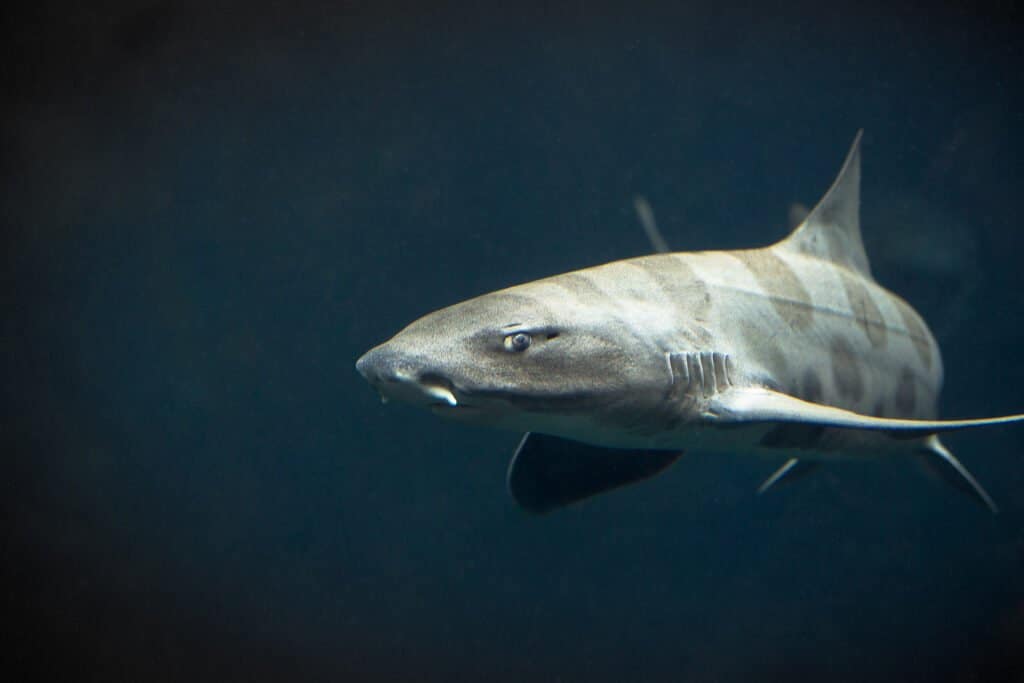
Graceful and strikingly patterned, the leopard shark (Triakis semifasciata) is one of the most recognizable coastal sharks of the Pacific Ocean. Despite their fierce appearance, these harmless sharks are gentle and slow-moving. Found along the western coast of North America from Oregon to Mexico, these sleek, medium-sized predators are often spotted by beachgoers and snorkelers. Prized by aquariums for their distinctive pattern of black saddles and spots, leopard sharks play an important role in their ecosystems.
This post was updated on October 28, 2025 to clarify adult diet and shark predators.
Leopard sharks can live up to 30 years.
©evantravels/Shutterstock.com
Appearance
The most recognizable feature of the leopard shark is the banded pattern on its back. These sharks have white underbellies, gray bodies, and black or dark brown bands, with lighter-colored markings in the center. Dark circular spots dot their backs in between the bands. They have translucent eyelids, called nictitating membranes, that protect their eyes while allowing vision
Leopard sharks weigh 20 pounds on average and measure between 4 and 5 feet long, and they have short, compact bodies. Females are larger than males, often by up to a foot in length. The largest leopard shark on record weighed just over 40 pounds.
Leopard sharks have two dorsal fins that are about the same size and one anal fin that is much smaller. These fins help them move through the water. Leopard sharks swim near the ocean floor to easily find food. They have three-pointed teeth, which have a smooth-edge pointed cusp in the center and two smaller cusps on each side.

Leopard sharks have three-pointed teeth.
©I, Jonathan Zander, CC BY-SA 3.0, via Wikimedia Commons – Original / License
Distribution and Habitat
Leopard sharks live off the West Coast of the United States and Mexico in the Pacific Ocean. They like to explore inlets, making them easy to spot and study. They like to swim near the ocean floor, where they find their food. Many fish have air sacs to maintain buoyancy, which means that they float when they are not swimming. Leopard sharks do not have air sacs, though, so they sink when they aren’t swimming.
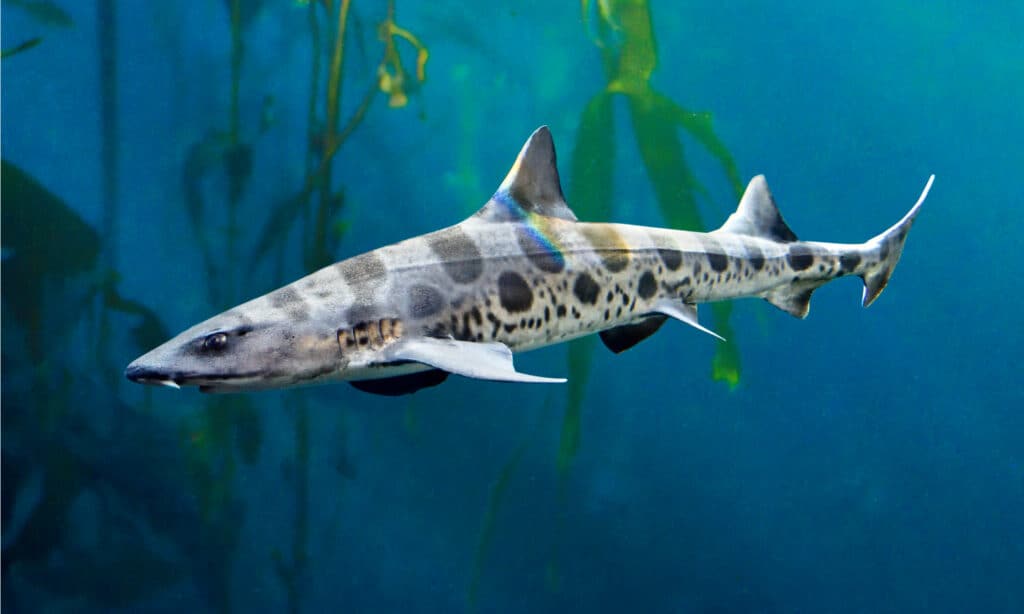
Leopard sharks live in the Pacific Ocean and can be found off the coasts of Mexico and the western United States.
©Barbara Ash/Shutterstock.com
Predators and Prey
Leopard sharks’ mouths open downward, bringing up food from the ocean floor. They suck up crabs, clams, shrimp, and fish eggs like a vacuum. Adult diet includes small fish (anchovies, surfperch, midshipmen), crustaceans, and clam siphons.
Larger sharks (especially sevengill and white sharks) and marine mammals may prey on them. However, their risk for survival comes from their dwindling habitat. They are also occasionally caught for their fins or by large-scale fishing operations.
Reproduction and Lifespan
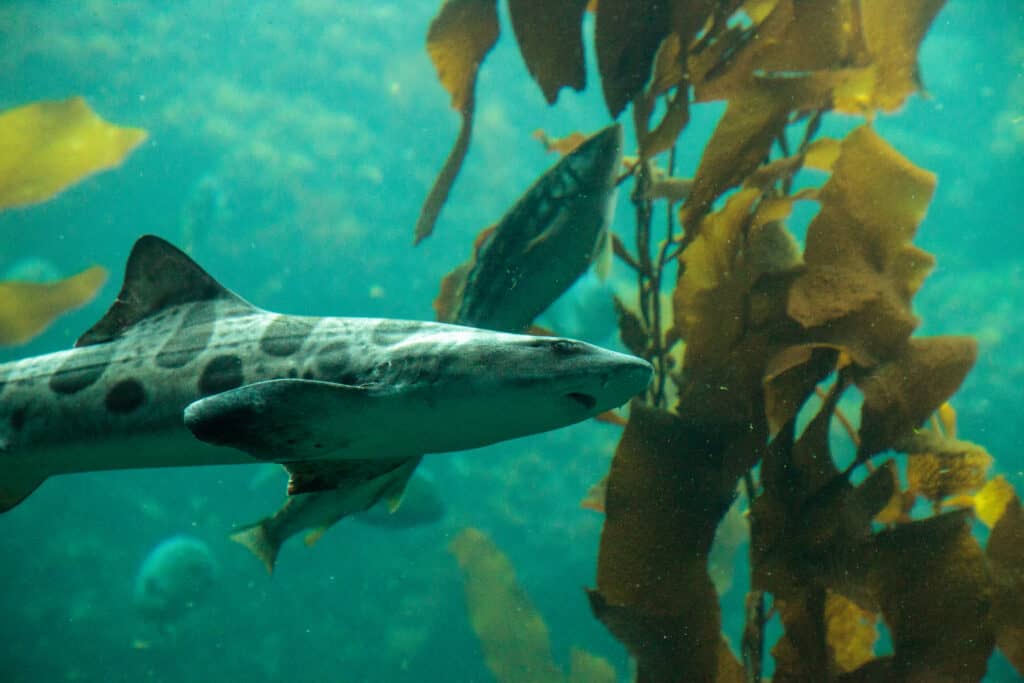
A mother leopard shark gives birth to an average of 20 live young. Her babies are called pups.
©SunflowerMomma/Shutterstock.com
Leopard sharks give birth to live babies, called pups. The eggs hatch inside the mother, and she gives birth to an average of 20 pups at a time. They are around 8 or 9 inches long when they’re born.
It takes around 10 years for a female leopard shark to reach breeding age. Researchers take special interest in pregnant female leopard sharks and their habits to help with conservation efforts.
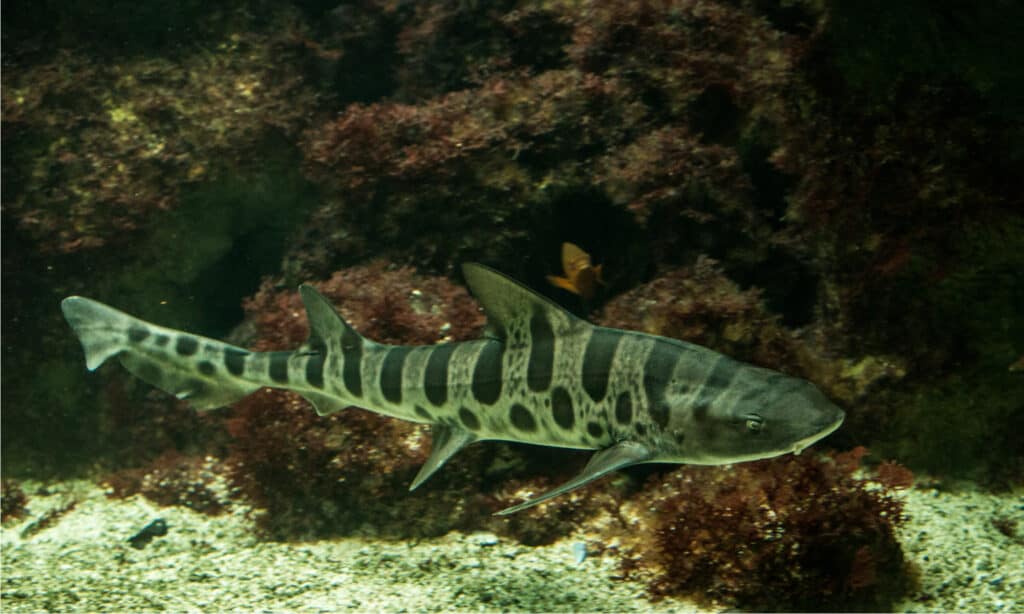
The average size of a leopard shark is 4-5 feet long and weighs around 20 pounds.
©Jiri Hrebicek/Shutterstock.com
Population
Leopard sharks are listed as least concern by the IUCN. They have protected waters to live in and are not hunted regularly by humans. They are occasionally caught and eaten, but they contain high levels of mercury due to their long lifespans, making them less than ideal for human consumption.
The post Leopard Shark appeared first on A-Z Animals.
November 28, 2025 at 06:02PMAbby Parks.jpeg)


.jpeg)

0 Comments